Ovarian Cyst
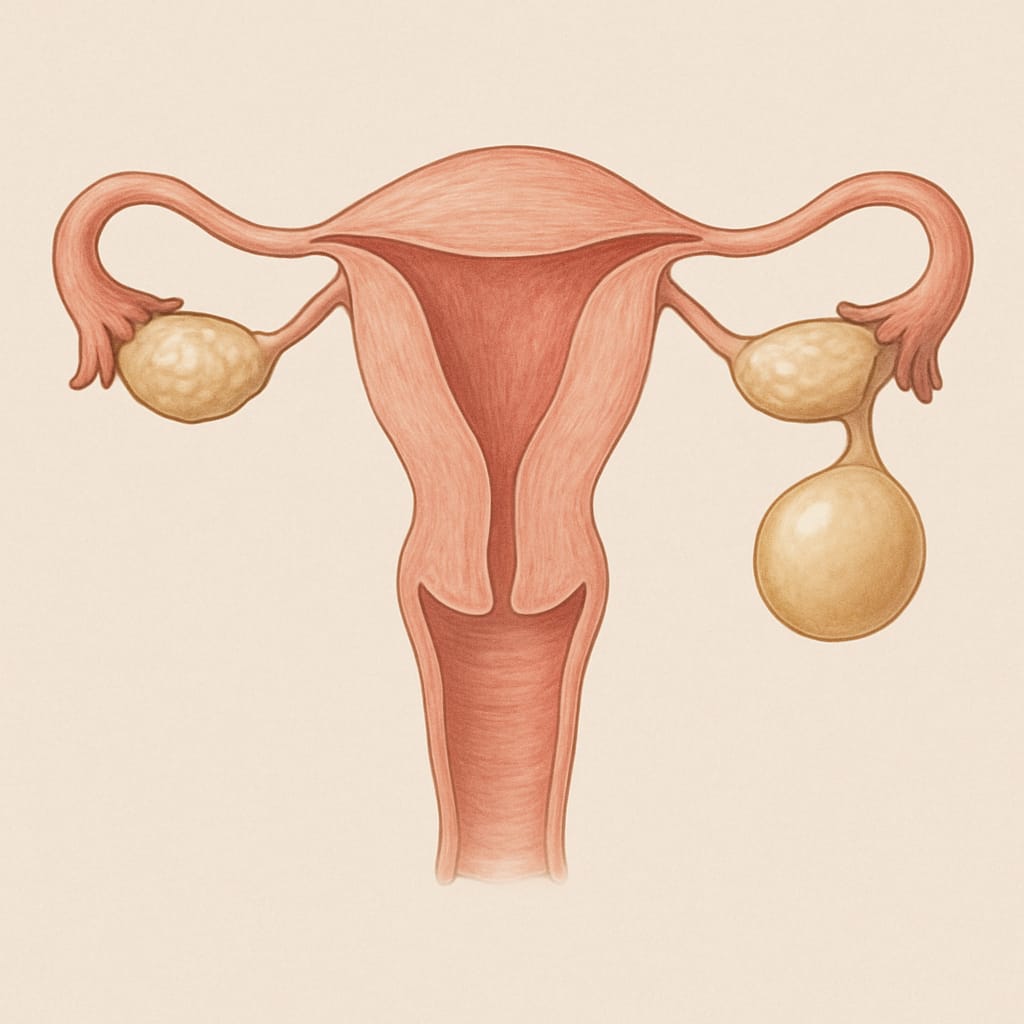
Ovarian Cyst
An ovarian cyst is a fluid-filled sac that forms on or inside an ovary. Ovaries are part of the female reproductive system and are located on both sides of the uterus. They release eggs and produce hormones like estrogen and progesterone.
Ovarian cysts are common and most of them are harmless. Many women will have an ovarian cyst at some point in their lives without even knowing it. Most cysts disappear on their own within a few weeks or months.
Types of Ovarian Cysts
Functional cysts: These are the most common type. They form during the menstrual cycle and usually go away without treatment.
Dermoid cysts: These are made up of different types of tissue, such as hair, skin, or teeth.
Cystadenomas: These develop from the cells on the surface of the ovary and may be filled with watery or thick fluid.
Endometriomas: These are linked to a condition called endometriosis, where tissue similar to the lining of the uterus grows outside the uterus.
Symptoms
Most ovarian cysts do not cause symptoms and are found during routine check-ups or imaging tests. However, if a cyst becomes large or ruptures, it may cause:
- Lower abdominal pain or pressure
- Bloating or swelling
- Changes in the menstrual cycle
- Pain during sex
- Frequent urination or difficulty emptying the bladder completely
- Nausea or vomiting if the cyst twists (called ovarian torsion)
Diagnosis
Ovarian cysts can be detected through:
- Pelvic examination
- Ultrasound
- Blood tests
- CT scan or MRI in certain cases
Treatment
Treatment depends on the size, type, and symptoms of the cyst. Options include:
Watchful waiting: Many cysts go away on their own. A follow-up ultrasound may be done in a few weeks.
Medications: Birth control pills may prevent future cysts from forming.
Surgery: If the cyst is large, causes symptoms, or looks suspicious, it may need to be removed through laparoscopy or open surgery.
When to See a Doctor
Seek medical attention if you have:
- Sudden, severe abdominal pain
- Fainting or dizziness
- Rapid breathing
- Fever along with abdominal pain
These may be signs of a ruptured cyst or ovarian torsion, which are medical emergencies.
Conclusion
Most ovarian cysts are not dangerous and go away without treatment. Regular check-ups and listening to your body are important. If you experience unusual symptoms, contact your doctor for proper diagnosis and care.
Book your consultation now and take the first step towards a more confident and harmonious life.

Address: 301,Near Afeem Kothi, Civil Line, Gonda, Uttar Pradesh 271001
Phone:
63872 00048
Email:
info@homeotreatwithdrajeet.in
Quick Links
Quick Links
Follow Us



© 2025 Homeo Treat with Dr. Ajeet . All rights reserved.